Queue Management System
Waiting in line is one of life’s most frustrating experiences. Whether at a bank branch, government office, hospital registration desk, or telecom service center, customers universally dislike standing in disorganized queues. Long waits lead to abandoned transactions, lost revenue, frustrated customers, and damaged brand reputation. For businesses and institutions serving high volumes of people daily, a professional Queue Management System transforms chaos into order.
A Queue Management System (QMS) is a technology solution designed to organize, manage, and optimize customer flow from arrival to service completion. Rather than allowing chaotic physical lines where customers push and grow increasingly frustrated, a QMS creates an orderly process that feels fair, transparent, and efficient.
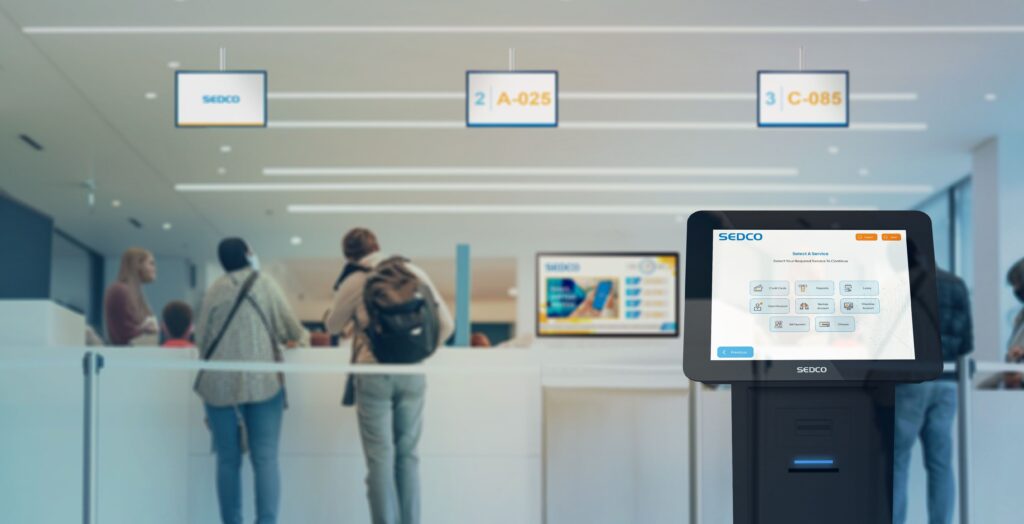
Modern queue management systems have evolved far beyond the simple “take a number” ticket dispenser. Today’s systems include digital ticketing kiosks, display screens showing current serving numbers and estimated wait times, audio announcements calling customers to designated counters, central management dashboards for administrators, real-time analytics on wait times and service durations, SMS and mobile app notifications, and customer feedback integration.
The benefits of implementing a queue management system are substantial. Customers experience reduced perceived wait times—even when actual wait times remain similar, organized queues feel faster. Businesses serve more customers per hour because staff are never idle wondering who is next. Abandonment rates drop when customers know exactly where they stand. Staff productivity increases with clear visibility of upcoming customers. Data analytics reveal operational bottlenecks and opportunities for improvement.
Industries benefiting from queue management systems include banking and finance, healthcare (hospital registration, pharmacy pickup, lab testing), government offices (passport, driver licensing, tax departments), telecommunications centers, retail checkouts, and transportation hubs.
Queue Management System in Islamabad
Islamabad, Pakistan’s beautifully planned capital city, serves as the administrative and diplomatic heart of the nation. The city hosts countless government ministries, foreign embassies, international organizations, and public service institutions. Every day, thousands of citizens flow through these facilities seeking services—passport renewals, visa applications, tax filings, driver licenses, and much more. An effective Queue Management System in Islamabad is essential for these institutions to fulfill their public service missions.
Without proper queue management, government offices become chaotic scenes of frustrated citizens waiting for hours while staff struggle to maintain order. International visitors encountering disorganized queues form negative impressions of Pakistani institutions. Citizens abandon transactions when lines become unbearable, leaving without receiving needed services.
Islamabad’s high volume of government services demands robust queue management. The Capital Development Authority (CDA), Passport Office, NADRA offices, Excise and Taxation Department, and dozens of other agencies collectively serve millions of citizens annually. During peak seasons—passport renewal rushes before Hajj or student visa seasons—queues stretch for hours. A queue management system helps these agencies process citizens efficiently, reducing wait times from hours to minutes.
The diplomatic and international presence adds another layer. With over 80 foreign embassies and consulates, plus international organizations, foreigners expecting efficient service face frustration when confronted with disorganized queues. Professional QMS demonstrates institutional competence and respect for visitors’ time.
Security considerations also matter. Government facilities maintain strict security protocols, and electronic queue management integrates with security infrastructure, maintaining digital records of ticket issuance, service counters used, and service durations.
Queue Management System in Pakistan
Beyond the capital, the need for organized customer flow extends across Pakistan’s major cities and smaller towns. From Karachi’s crowded bank branches to Lahore’s busy hospitals, from Peshawar’s government offices to Multan’s retail centers, a Queue Management System in Pakistan addresses universal challenges while accommodating local conditions.
Pakistan’s service sector has grown dramatically in recent years. Banks have expanded branch networks. Private hospitals operate multiple locations. Telecom companies serve millions of walk-in customers monthly. However, the Pakistani market presents unique challenges that off-the-shelf international systems fail to address.
Power fluctuations and load shedding remain realities across much of Pakistan. A QMS designed for Pakistan must include robust uninterruptible power supplies (UPS), automatic failover, and extended battery backup. Language diversity matters—Urdu and English support is essential, with visual cues (color coding, icons) for customers with limited literacy. Integration with local software ecosystems, including banking systems and NADRA verification, is often required.
Cost sensitivity is another factor. Pakistani organizations face pressure to deliver services efficiently while controlling costs. International QMS vendors charge premium prices in foreign currency. Local providers offering competitive pricing in Pakistani Rupees make professional queue management accessible to a much wider market.
Local support and rapid response are critical. When a queue management system fails at a busy passport office, every minute of downtime damages service delivery. Providers with technicians in major Pakistani cities ensure average on-site response times under 6 hours for priority issues.
TheNextGenTechnologies: Pakistan’s Premier Queue Management Provider
Across Islamabad, Rawalpindi, Lahore, Karachi, and beyond, one company stands as a top provider of queue management solutions: TheNextGenTechnologies. Operating from their website thenextgentechnologies.com, this innovative Pakistani company builds systems specifically for local conditions—power fluctuation tolerance, Urdu and English bilingual operation, integration with local software, and affordable pricing in Pakistani Rupees.
TheNextGenTechnologies has deployed queue management systems at dozens of locations across Islamabad including government ministries, bank branches, hospitals, NADRA offices, and passport offices. Results include reduced customer wait times by 60-80 percent, increased customer throughput by 30-50 percent, and improved satisfaction scores.
Visit thenextgentechnologies.com today to schedule a consultation. Transform your customer service from chaos to efficiency.
Frequently Asked Questions (FAQs)
Q1: How long does it take to install a queue management system at my location in Islamabad?
Typical installation for a single location takes 2-5 days including site assessment, equipment installation, networking, software configuration, integration with existing systems, and staff training. TheNextGenTechnologies works around your operating hours, performing installation during evenings or weekends.
Q2: Can your queue management system work during load shedding?
Yes, TheNextGenTechnologies designs all systems with power redundancy as standard. Ticketing kiosks and display screens include integrated UPS batteries providing 4-8 hours of backup power. Cloud-based deployments ensure data continuity during extended outages.
Q3: Does your system support Urdu language for tickets and announcements?
Yes, full bilingual support for Urdu and English is standard. Tickets print in both languages. Display screens show Urdu script and English simultaneously. Audio announcements are available in Urdu, English, or both.
Q4: What is the cost of a queue management system for a small bank branch in Pakistan?
Costs vary based on number of service counters, display screens, and kiosks. A basic system for 3-5 counters typically ranges from PKR 150,000 to PKR 250,000 outright purchase. Cloud-based subscription options start from PKR 5,000 monthly. TheNextGenTechnologies provides free detailed quotes.
Q5: Do you provide maintenance and support after installation?
Yes, TheNextGenTechnologies offers comprehensive support packages including 24/7 remote monitoring, scheduled preventive maintenance, emergency on-site repairs (average 6-hour response in major cities), software updates, and replacement parts. Visit thenextgentechnologies.com for current support options.