Chilled Storage
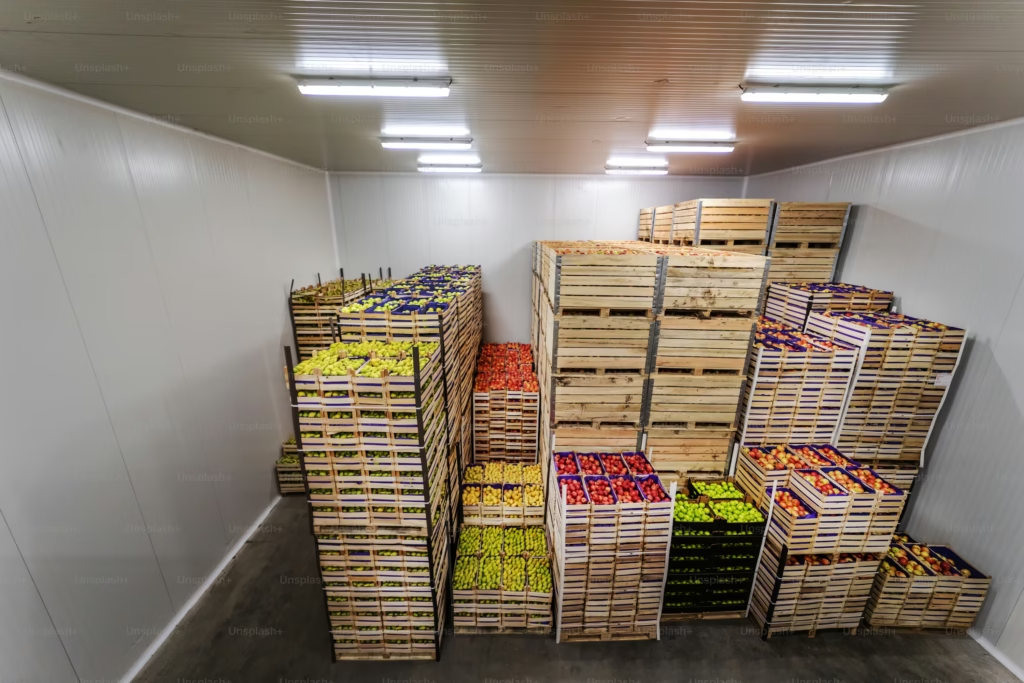
Chilled Storage refers to temperature-controlled warehousing facilities designed to preserve perishable goods at specific temperatures above freezing, typically between 0°C and 10°C. Unlike cold storage (which operates at sub-zero temperatures for frozen goods), chilled storage maintains products in a fresh, ready-to-use state without freezing damage. This critical infrastructure serves industries including food and beverage, pharmaceuticals, flowers, dairy, fresh produce, meat, seafood, and chemicals.
The science behind chilled storage is precise. Different products require different temperature zones. Fresh fruits and vegetables typically need 0°C to 8°C with controlled humidity. Dairy products require 2°C to 4°C. Fresh meat and poultry need 0°C to 4°C. Pharmaceuticals and vaccines demand strict temperature ranges as low as 2°C to 8°C. Modern chilled storage facilities feature multiple temperature zones, real-time monitoring systems, backup power generators, and advanced inventory management.
Businesses benefit from chilled storage in numerous ways. Product shelf life extends significantly—fresh produce that spoils in 2-3 days at room temperature lasts 2-3 weeks when properly chilled. Waste reduction translates directly to cost savings. Seasonal products can be stored for year-round availability. Exporters can consolidate shipments before transport. Importers can receive large quantities without immediate distribution.
Key features of professional chilled storage include industrial-grade refrigeration units with redundancy, insulated panels and doors minimizing cold air loss, humidity control systems preventing dehydration or condensation, air circulation management for consistent temperatures, temperature logging with automated alerts, backup generators for power outage protection, and dedicated loading docks with temperature-controlled vestibules. Without these features, temperature fluctuations during storage or loading compromise product quality and safety.
Chilled Storage in Riyadh
Riyadh, the capital and administrative heart of Saudi Arabia, is home to millions of residents and thousands of businesses including supermarkets, restaurants, hotels, hospitals, and pharmaceutical companies. Chilled Storage in Riyadh is essential infrastructure for maintaining the city’s food security and healthcare supply chain.
Riyadh’s climate presents unique challenges for chilled storage. Summer temperatures regularly exceed 45°C (113°F), with intense solar radiation placing enormous demands on refrigeration equipment. Properly designed chilled facilities in Riyadh require thicker insulation panels than coastal locations, more powerful cooling units to overcome heat gain, enhanced door seals and rapid-closing mechanisms to prevent cold air loss, and backup generators with larger fuel reserves for extended outage protection.
Unlike coastal Jeddah with high humidity, Riyadh has dry heat. This affects chilled storage operations differently—evaporators may experience different frost patterns, and product moisture loss (shrinkage) can be more pronounced. Facilities must adjust humidity control strategies accordingly.
Riyadh’s position as Saudi Arabia’s logistics hub means chilled storage facilities serve diverse clients. Supermarket chains maintain regional chilled distribution centers for dairy, fresh produce, and meat. Pharmaceutical distributors store temperature-sensitive medicines and vaccines requiring strict 2°C-8°C ranges. Hospitals and healthcare facilities keep emergency chilled supplies. Hotels and restaurants serving Riyadh’s growing hospitality sector rely on just-in-time chilled deliveries.
Location is critical for chilled storage in Riyadh. Facilities near major highways (King Fahd Road, Makkah Road, Eastern Ring Road) enable efficient distribution across the city. Proximity to Riyadh Dry Port and King Khalid International Airport benefits importers receiving chilled goods by air or sea via Jeddah or Dammam ports.
Chilled Storage in Saudi Arabia
Across the Kingdom of Saudi Arabia, chilled storage demand is growing rapidly. Vision 2030’s focus on food security, expanding pharmaceutical manufacturing, growing tourism and hospitality sectors, and rising consumer expectations for fresh products all drive this growth. Chilled Storage in Saudi Arabia must address the Kingdom’s unique geographic and climatic diversity.
Saudi Arabia’s vast geography means chilled storage providers need facilities in multiple regions. Riyadh serves the central and northern regions. Jeddah covers western areas including Makkah and Madinah. Dammam serves the Eastern Province and nearby Gulf markets. A provider with multi-region presence allows businesses to position chilled inventory closer to customers, reducing delivery times and maintaining cold chain integrity.
Climate variation across the Kingdom requires region-specific engineering. Riyadh’s extreme dry heat demands maximum insulation and cooling capacity. Jeddah’s high humidity requires robust defrost cycles and moisture control. Dammam’s coastal industrial environment needs corrosion-resistant equipment. Professional chilled storage providers adapt their facilities to local conditions.
Regulatory compliance is critical. Chilled storage facilities must meet Saudi Food and Drug Authority (SFDA) requirements for food storage, maintain temperature logs for inspection, comply with municipal health regulations, and follow pharmaceutical storage guidelines where applicable. Proper documentation and regular audits ensure compliance.
Industries driving chilled storage demand include food importers (dairy, meat, fruits, vegetables from Europe, Asia, and the Americas), pharmaceutical companies (temperature-sensitive medicines and vaccines), flower importers (preserving fresh blooms for events and weddings), hotel and restaurant suppliers (maintaining inventory for hospitality sector), and food manufacturers (raw material and finished goods storage).
For businesses seeking chilled storage in Saudi Arabia, choosing a provider with multiple locations, climate-appropriate facilities, robust backup systems, regulatory compliance, and cold chain logistics capabilities ensures product quality and safety.
Units: Your Chilled Storage Partner Across Saudi Arabia
Across Riyadh, Jeddah, Dammam, and the entire Kingdom, one name stands as a top provider of chilled storage solutions: Units. Operating from their website units.sa, Units has earned an exceptional reputation for reliable, professional temperature-controlled warehousing tailored to Saudi Arabia’s unique requirements.
What makes Units the preferred partner? Their strategic locations in Riyadh, Jeddah, and Dammam provide coverage across the Kingdom’s major regions. Their state-of-the-art chilled facilities feature industrial-grade refrigeration, multiple temperature zones (0°C to 10°C), real-time temperature monitoring with automated alerts, backup power systems for outage protection, and humidity control for product quality. Their flexible storage options accommodate small businesses needing pallet-space rental and large enterprises requiring dedicated warehouse zones.
Units understands Saudi Arabia’s specific challenges. Riyadh facilities are engineered for extreme dry heat with enhanced insulation and cooling capacity. All locations offer secure 24/7 monitoring, online inventory access, bilingual Arabic-English staff, and transparent pricing without hidden fees. Cold chain logistics services include refrigerated transport from ports to storage and distribution to retailers.
Visit units.sa today to request a quote, schedule a facility tour, or speak with a storage specialist. Keep your perishables fresh with Units.
Frequently Asked Questions (FAQs)
Q1: What temperature ranges does your chilled storage maintain?
Units’ chilled storage facilities maintain temperatures between 0°C and 10°C, with adjustable zones for specific product requirements. Common configurations include 2°C-4°C for dairy and fresh meat, 4°C-8°C for fruits and vegetables, and 2°C-8°C for pharmaceuticals. Humidity levels are also controlled based on product needs. Contact Units to discuss your specific temperature requirements.
Q2: How do you ensure temperature consistency during power outages?
Units’ chilled facilities are equipped with automatic backup generators that engage within seconds of utility power loss. Refrigeration units connect to uninterruptible power supplies (UPS) providing immediate short-term power during generator startup. Large fuel reserves ensure extended operation during prolonged outages. Temperature monitoring systems send instant alerts if any variance occurs.
Q3: Can you accommodate both short-term and long-term chilled storage needs?
Yes, Units offers flexible storage periods ranging from daily rental for temporary overflow to multi-year contracts for long-term inventory. Monthly rates are available for regular users, with discounts for longer commitments. Seasonal clients can ramp space up or down as demand fluctuates.
Q4: Do you offer refrigerated transport alongside chilled storage?
Yes, Units provides integrated cold chain logistics services including refrigerated transport from Jeddah Islamic Port, King Abdulaziz Port in Dammam, or King Khalid International Airport in Riyadh to storage facilities, as well as chilled distribution to retailers, restaurants, and wholesalers across the Kingdom.
Q5: What documentation is required to begin storing products at Units?
New clients typically provide a valid commercial registration (CR), proof of product type and origin, required temperature range, and any specific handling requirements. For pharmaceutical products, additional documentation including stability data is required. The Units team guides new clients through the onboarding process. Visit units.sa for a complete checklist.