
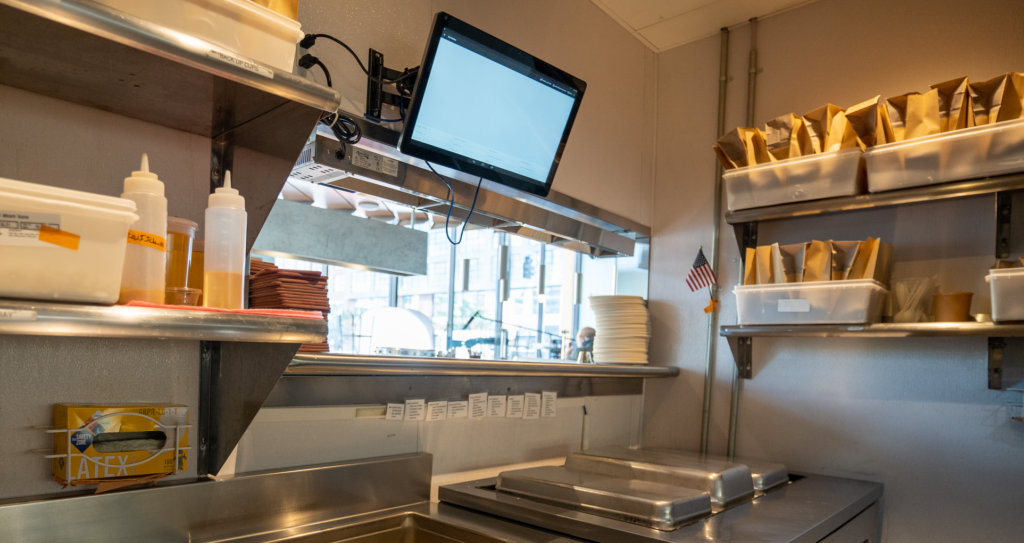
Storage for Restaurants
Running a successful restaurant is challenging enough without worrying about ingredient storage, supply chain disruptions, or running out of essential items. Professional Storage for Restaurants solves these problems by providing dedicated, organized warehousing for dry goods, chilled products, frozen foods, and non-food supplies.
Restaurants have diverse storage needs. Dry storage holds canned goods, rice, flour, pasta, cooking oils, spices, and packaged snacks. Chilled storage (0°C to 10°C) preserves dairy products, fresh produce, meats, and prepared ingredients. Frozen storage (-18°C to -25°C) maintains meats, seafood, vegetables, and desserts. Non-food storage covers cleaning supplies, paper products, uniforms, and equipment.
The benefits of offsite storage for restaurants are substantial. Bulk purchasing becomes feasible—buying in larger quantities reduces per-unit costs significantly. Consistent supply ensures you never run out of essential ingredients during busy service. Space optimization frees your valuable back-of-house area for food preparation rather than inventory storage. Seasonal flexibility allows stocking up before Ramadan, holidays, and peak seasons. Multi-location efficiency enables centralized storage for restaurant chains serving multiple branches from one warehouse.
For restaurant owners, choosing the right storage partner matters. Look for facilities with multiple temperature zones (dry, chilled, frozen), reliable backup power to prevent spoilage during outages, hygienic conditions meeting food safety standards, flexible access for emergency supply runs, and inventory management systems tracking expiration dates and quantities.
Storage for Wholesalers and Retailers
Wholesalers and retailers face unique inventory challenges. Seasonal demand fluctuations require ramping up before peaks and reducing during slow periods. Supplier minimum order quantities often exceed immediate needs, requiring buffer storage. Multiple sales channels (wholesale, retail, e-commerce) demand organized inventory segregation. Storage for Wholesalers and Retailers provides the flexible, scalable warehousing that trading businesses require.
Wholesalers benefit from centralized distribution hubs where bulk inventory arrives from manufacturers and gets broken down into smaller quantities for retail customers. Cross-docking capabilities allow immediate transfer from incoming to outgoing shipments, reducing handling costs. Pick-and-pack services fulfill individual store orders efficiently. Inventory management systems provide real-time visibility across all stored products.
Retailers benefit from offsite storage in several ways. Store space optimization reserves valuable sales floor and back-room areas for customer-facing activities rather than inventory storage. Just-in-time delivery from warehouse to store reduces on-hand inventory while ensuring shelves remain stocked. Seasonal flexibility allows stocking up for holiday rushes without overflowing store storage areas. E-commerce fulfillment enables online orders shipped directly from warehouse to customers.
For wholesalers and retailers, look for storage partners offering flexible contract terms scaling with seasonal demand, robust security protecting valuable inventory, efficient receiving and dispatch operations, technology integration with your existing systems, and value-added services including repackaging, labeling, and quality inspection.
Storage for Electronics & Smart Devices
Electronics and smart devices—smartphones, laptops, tablets, smartwatches, televisions, audio equipment, gaming consoles, and components—require specialized storage conditions beyond standard warehousing. Storage for Electronics & Smart Devices protects valuable, sensitive products from the environmental and handling hazards that cause damage.
Temperature control is essential for electronics. Extreme heat degrades batteries, damages sensitive components, and accelerates aging of plastics and adhesives. The ideal range is 15°C to 25°C. Humidity control prevents moisture damage—high humidity causes corrosion of metal contacts and circuit boards, while extremely dry conditions create static electricity risks. Target humidity is 40-50 percent.
Dust protection is critical. Fine dust particles infiltrate device openings, causing overheating, fan failure, and electrical shorts. Professional electronics storage maintains positive air pressure and high-quality door seals to keep dust out. ESD (electrostatic discharge) protection prevents static electricity damage to sensitive components through conductive flooring, grounded shelving, and anti-static packaging requirements.
Security is paramount for high-value electronics. Features should include 24/7 CCTV surveillance, access control systems with individual credentials, secure perimeter with alarm monitoring, and inventory tracking with serial number recording for each device.
For electronics businesses, choose storage providers with climate-controlled conditions meeting manufacturer specifications, ESD protection measures, high-security protocols, careful handling practices, and insurance coverage appropriate for high-value items.
Units: Your Specialized Storage Partner Across Saudi Arabia
Across Riyadh, Jeddah, Dammam, and the entire Kingdom, one name stands as a top provider of specialized storage solutions: Units. Operating from their website units.sa, Units offers tailored warehousing for restaurants, wholesalers and retailers, and electronics and smart devices.
For restaurants, Units provides dry, chilled, and frozen storage zones with backup power protection. For wholesalers and retailers, Units offers flexible scalable space with pick-and-pack services. For electronics, Units maintains climate-controlled, dust-protected, high-security facilities with ESD protection.
All Units locations feature 24/7 security monitoring, online inventory access, bilingual Arabic-English staff, transparent pricing, and flexible contract terms. Value-added services include receiving and inspection, repackaging and labeling, quality control, and local distribution.
Visit units.sa today to request a quote or schedule a consultation. Store your specialized products with confidence—choose Units.
Frequently Asked Questions (FAQs)
Q1: Does Units offer both chilled and frozen storage for restaurants?
Yes, Units provides all three temperature zones for restaurant storage—dry (ambient), chilled (0°C to 10°C), and frozen (-18°C to -25°C). Multiple temperature zones at the same facility allow restaurants to consolidate all inventory in one location. Backup generators protect perishable goods during power outages.
Q2: Can wholesalers access their inventory outside normal business hours?
Yes, Units offers 24/7 access for clients requiring after-hours retrieval. Advance notice is required for security purposes. Extended access fees may apply depending on frequency. Contact Units to discuss your specific access requirements.
Q3: Does Units provide climate-controlled storage for electronics and smart devices?
Yes, Units’ electronics storage maintains temperatures between 15°C and 25°C with humidity at 40-50 percent. Positive air pressure minimizes dust infiltration. ESD protection measures include conductive flooring and grounded shelving. Security features include 24/7 CCTV and access control.
Q4: What value-added services does Units offer for retailers?
Units offers pick-and-pack services fulfilling individual store orders from bulk inventory, repackaging and labeling for retail presentation, quality inspection checking for damage before distribution, and local delivery to store locations. These services streamline retailer operations and reduce in-store labor requirements.
Q5: Are there volume discounts for long-term storage contracts?
Yes, Units offers volume discounts for larger storage commitments and reduced rates for multi-year contracts. Monthly rates are available with flexibility to scale space up or down as seasonal demand fluctuates. Visit units.sa for current pricing or request a customized quote.